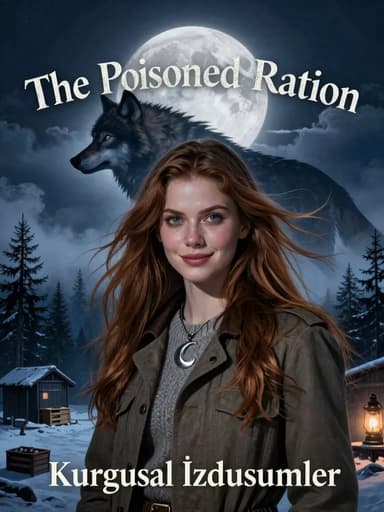
The Poisoned Ration
- Genere: Werewolf
- Autore: Kurgusal İzdüşümler
- Capitoli: 171
- Stato: In corso
- Classificazione per età: 18+
- 👁 8
- ⭐ 7.5
- 💬 0
Sinossi
Ruth has spent twelve years weighing venison and keeping her head down as an Omega in the Blackwood pack's cannery. Then one autumn morning she tastes the winter batch and her wolf recoils: the meat is laced with wolfsbane, and the poison is coming from inside the Council of Alphas. Callum, the rival Alpha across the border, claims she is his fated mate. Ruth feels the spark too, but Council law forbids an unratified bond between rival packs, and the inspector who controls ratification is the same woman signing off on the poisoned ration. Ruth cannot mind-link him, cannot prove what she tasted, and cannot protect her pack alone. As the weakest wolves begin to sicken, Ruth discovers the poison has been hiding an Alpha bloodline inside her that the Council has hunted for decades. The next full moon will decide whether Blackwood survives—and whether the bond she never wanted becomes the one thing that saves them all. Place and Time: Blackwood pack territory, the boreal forest of northern Minnesota, United States, in the autumn and winter of 1974.
Chapter 1: The Last Crate
The steam from the rendering vats had fogged every window in the cannery by seven, and I was still counting jars.
Three hundred and forty-one on the first shelf. Three hundred and forty on the second. I had counted them twice already and got two different numbers, which meant I was tired, or the jars were moving on their own, or both. Somewhere behind me the pressure gauge on the big cooker hissed its slow complaint, the way it did every morning before the fire was built up properly. I knew that hiss better than I knew my own breathing. Twelve winters of it.
The last crate of the season sat on the loading bench where I had left it the night before, stamped with the date and the pack seal and the neat black letters that said BLACKWOOD WINTER STORES, NOVEMBER 1974. I had sealed it myself. I had sealed four hundred of them, and my hands still smelled of brine and venison and the cold iron of the canning machine.
I should have gone home. The shift bell had rung an hour ago. Instead I stood there with my pencil behind my ear and the ledger open on the bench, and I did what I always did when I was too tired to leave a room: I found one more thing to check.
The crate's lid was not quite square. That was the first thing I noticed. Two of the nails sat proud of the wood, and the seam along the top edge gaped a little, wide enough to slide a fingernail into. I ran my thumb along it and something wet came away on my skin, thin and dark and not brine.
I lifted the lid.
The smell came up at me all at once, and I stepped back before my mind had caught up with my nose. It was not rot. I knew rot. I had spent twelve years learning the smell of meat going bad, and this was not that. This was bitter, sharp, like the green taste at the back of your throat when you chew an aspirin too fast. My wolf stirred somewhere under my ribs, a low unsettled movement, and then she went quiet again in the way she always did, as if she had remembered her place.
I leaned over the crate and breathed in slowly.
There it was again. Bitter. Green. Wrong.
The cans inside were stacked in neat rows, each one with the little dent in the lid where the press had come down, each one wearing its paper label with the pine tree and the words WINTER RATION. They looked exactly like every other can that had gone out of this cannery. They looked fine.
I stood there for a long moment with my hand hovering over the first row, and then I told myself I was a tired woman who had been breathing steam and vinegar for eleven hours and had no business inventing poisons out of thin air. I put the lid back, squared it as best I could, and went home.
Home was two rooms in the pack house's east wing, a bed and a stove and a window that looked out on the fence line. I washed my face at the basin, and the water ran brown with the day's work, and I lay down in my clothes because the sheets were cold and I was too tired to care. Outside, the wind came down off the ridge and pushed at the eaves. Somewhere below me a door opened and closed. The pack house went about its business.
I could not sleep.
The bitter smell stayed in my nose. I turned the pillow over. I counted the boards in the ceiling, which is what I did instead of counting sheep, and I got to forty-one before I lost my place. My wolf would not settle. She paced in her slow circle and stopped and pressed her nose against the inside of my ribs, and I knew what she was trying to tell me and did not want to hear it.
Something is wrong with the meat.
I sat up.
The clock on the shelf said ten past midnight. I pulled on my boots and my coat and went out into the corridor, and the boards creaked under me the way they always did outside the Beta's room, and I kept going.
The cannery stood at the end of the lane with the light over its door burning yellow in the dark. I had my key. I had a key because I was the one who opened up and the one who locked up, and nobody had ever thought twice about giving it to me. An Omega with a key to the meat house. What harm could she do.
The last crate was where I had left it. I opened the lid and breathed in, and there it was, stronger now that the cold had settled the other smells down. Bitter. Green. Wrong. I took out the top can and turned it under the lamp. The label was clean. The seal was clean. I looked at the bottom of the can, where the press had stamped the batch code, and I froze.
The code was 1-1-4.
I knew every code we had run that autumn. The winter stores began at 1-0-9 in October and ran up to 1-1-9 by the middle of November. I had written them all in the ledger in my own hand. There was no 1-1-4. There had never been a 1-1-4.
I put the can back in its row and closed the lid and stood there in the cold with my hands hanging at my sides, and a very quiet part of me that had kept me alive in this pack for twelve years said, Put it back. Write nothing. Say nothing. Go to bed.
The other part of me, the part that had been sick on and off for two years now with a sour stomach and a tiredness that would not lift, said something else entirely.
I went back to my room and did not sleep at all.
By morning the snow had started, small hard grains of it rattling against the window, and I was at my bench in the cannery before the shift bell with the ledger open in front of me and my pencil moving in the margin. I had made a small mark there, an x, next to the entry for the last crate. It was not evidence of anything. It was just a mark. But it made me feel as if I had done something.
The others came in stamping the snow off their boots. Leo came in with a red scarf wrapped up to his chin and his hair sticking out of it like straw, and he bumped the bench with his hip on purpose because he knew it made me drop my pencil. Hannah came in slower, with her white hair pinned up under a wool cap and her hands wrapped round a chipped mug of something that steamed, and she set the mug down by my elbow without a word and went to the fire.
"Three hundred and forty jars on the second shelf," I said to nobody in particular. "I counted them three times."
"Then there are three hundred and forty jars," said Hannah. "Or there are three hundred and forty-one, and one of them has got up and walked off out of spite."
Leo laughed. He was twenty-two and laughed at almost anything, and I liked him for it more than I would ever tell him. He took the long pole down from the wall and went round the room opening the high windows, letting the cold in, and I pulled my coat tighter and let him.
The morning went the way mornings went. The fire was built up. The big cooker came to pressure. The first batch of the day went into the machine, and the machine clanked and pressed and spat out its cans, and I weighed and logged and stamped. My pencil moved in the ledger. The x sat there in the margin next to the last crate, and I did not look at it, and I did not stop knowing it was there.
At ten the pack house door banged open, and the cold came down the lane ahead of the man who walked in it.
I knew him before I saw his face. Everyone in Blackwood knew the Kintyre scent, or knew to be afraid of it. It came into the cannery like woodsmoke and wet stone and something underneath that was older than either, and my wolf came up out of her corner all at once, awake and alert, and I felt her press against my skin as if she wanted to be let out.
Callum filled the doorway. He had sand-colored hair that the snow had darkened at the edges, and grey eyes that went round the room once and then stopped on me, and he was taller than Elias and broader through the shoulders, and he did not look like a man who had come to trade.
"Alpha," said Elias, from behind him. Our Beta had come down from the pack house with his coat half buttoned and his black hair wet with snow. "You might have sent word."
"I might have," said Callum.
He had refugees with him. I saw them through the window, a huddle of six or seven wolves out in the lane with blankets round their shoulders and the look that refugees get, the one that says they have walked further than they thought they could. Callum had brought them to our border and then walked them through it, which was a thing an Alpha did not do without permission, and Elias's face had gone still in the way it did when he was deciding how angry to be.
"We need ration," Callum said. "For these people. And I would speak to whoever keeps the books."
"That would be me," I said.
His eyes came back to me. I had my pencil in my hand and my apron on and my hair coming loose from its pin, and I was aware of all of it at once, which was not a thing I usually cared about.
"You keep the books," he said.
"I weigh the meat and I keep the books. Ruth."
"Ruth." He said my name once, in a low voice, as if he were setting it down somewhere and wanted to remember where. "I need to know what is in the winter ration this year. All of it. What went out and where it went and who signed for it."
The cannery had gone quiet. Leo had stopped with the pole in his hands. Hannah stood by the fire with her mug and her eyes on Callum's face, and her expression was not the expression she wore when strangers came.
"Why?" I asked.
"Because three wolves in my territory have been sick since the first snow," Callum said. "And they all ate Blackwood ration."
The cold came in through the open windows and settled on my skin. My wolf was very still now, listening, and I was listening too, and the mark I had made in the ledger felt suddenly like it had been there for years, waiting for someone to read it.
Elias said, "That is a serious thing to say in another Alpha's cannery."
"It is a serious thing to find," said Callum.
He came further in. He did not look at Elias. He came to the end of my bench and set both hands on the wood and leaned over the open ledger, and his sleeve brushed the back of my hand, and the whole world went white and hot and then very quiet.
I have heard wolves describe the mate bond. Hannah told me once that it comes to some people like a warm room after a long walk in the snow, and to others like a bell struck too close to the ear. I had spent thirty years assuming it would never come to me. Weak wolf, low rank, a woman the pack had long ago stopped expecting anything from.
It came like a hand closing around my heart.
I felt the spark run up my arm from the back of my hand where his sleeve had touched it, and I felt my wolf rise and turn and go perfectly, terribly still, and I knew, and I knew he knew, because his hands on the wood had gone rigid and he had stopped breathing.
Nobody else in the room had felt it. They were all still watching Elias, and Hannah was watching me, and Leo was watching Hannah, and the moment went on and on and nobody said a word.
Callum straightened up. He did not look at me. He looked at the far wall for a second, and then at Elias, and his voice when it came was exactly as low and even as it had been before.
"Show me the books," he said. "All of them."
"You will show him nothing," Elias said.
"I will show him the books," I said.
Elias turned to me, and his face was not angry, which was worse. It was afraid. "Ruth."
"The books are mine," I said. "I keep them, and if there is a question about the ration then I am the one to answer it, and I would rather answer it here in the light than have it asked somewhere else in the dark."
I closed the ledger and put it under my arm, and I went to the shelf and took down the older books, the ones bound in green cloth with the pack seal on the spine, and I stacked them on the bench. Callum watched me with his grey eyes and did not move to help. His scent was everywhere now. I could not get away from it. I could not stop my wolf from leaning toward it, and I could not stop the thought that had come into my head and would not leave, which was that three wolves in Kintyre had been sick since the first snow, and I had been sick for two years, and the winter ration was going out to every pack in the territory.
"These are the books for this year," I said. "Those are last year's. The ones on the top shelf go back to 1968 and I will not lift them down for a man with snow on his boots unless he asks me nicely."
Callum's mouth moved at one corner. It was not quite a smile. "I will ask nicely when I have read these."
I pushed the first book across the bench to him and he opened it and began to read, and I stood there with my arms folded and my heart going too fast and the bitter green smell of the last crate still in my nose.
The snow kept coming down. Hannah took her mug and went out into the lane to bring the refugees in to the fire, and Leo went with her to carry blankets, and Elias stood by the door with his arms crossed and his jaw set and watched the Kintyre Alpha read our books.
I watched him too. I watched his finger run down the column of batch codes, and I thought about the can with 1-1-4 stamped on its bottom, and I thought about how easy it would be to say nothing and let him find it or not find it on his own.
He stopped reading.
His finger had stopped at the bottom of the page, at the last entry of the season, at the crate I had marked with an x in the margin. He looked at the mark for a long moment. Then he looked up at me, and his grey eyes were steady and very serious, and something in them had changed.
"Who marked this page?" he asked.
I opened my mouth to answer, and from the lane outside a woman's voice rose, one of the refugees, high and frightened, calling out a name that made Hannah turn around so fast she spilled her mug in the snow.
The name was mine.
Chapter 2: The Taste of Wolfsbane
The woman in the lane was called Ana, and she was not calling for me.
She was calling for her daughter, a girl of nine or ten with a blanket over her head and her boots wrapped in sackcloth, and the name she was shouting happened to be mine. It took me a moment to understand that. It took Hannah less. She had the woman by the arm and was speaking low and steady, and the girl was standing right there by the fence post with her hand in her mother's coat, and nobody was in danger at all.
I let out a breath I had not known I was keeping, which is a thing I have sworn I will never do again, and I went back to my bench.
Callum had not moved. His finger was still on the page, on the little x I had made in the margin, and he was watching me with an expression I could not read.
"You did not answer me," he said. "Who marked this page?"
"I did."
"Why?"
I thought about lying. I have thought about it since, more than once, and I will tell you now what I
Ti piacerà anche









Usa AlphaNovel per leggere romanzi online quando vuoi e dove vuoi
Entra in un mondo dove potrai leggere tante storie e trovare i migliori romanzi d’amore e libri romantici con lupi mannari alfa che meritano la tua attenzione.


 Scansiona il codice QR e vai al download dell'app